


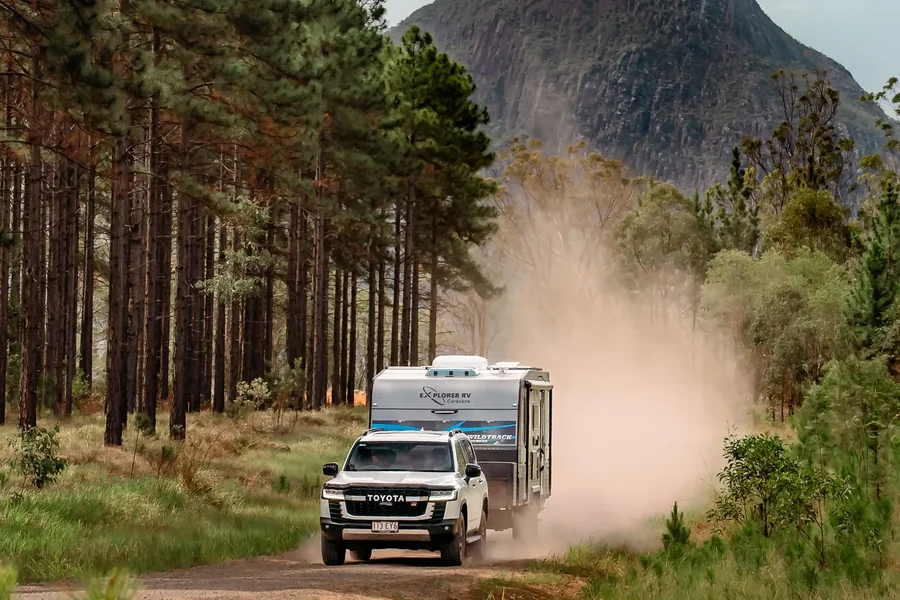
Australia’s most spectacular places are often found at the end of rough roads. The Kimberley, Cape York, the Flinders Ranges, the Simpson Desert and countless remote national parks reward travellers willing to leave the bitumen behind. For caravanners and camper trailer owners, these journeys bring new challenges. Corrugated gravel roads, deep ruts, river crossings and rocky tracks place enormous stress on vehicles and trailers.
Preparing properly makes the difference between an adventure to remember and a trip cut short by breakdowns.
Understanding the Punishment
Corrugations, the rhythmic ridges that form on gravel roads, are particularly hard on equipment. They create constant vibration that loosens fittings, cracks welds, damages suspension components and shakes the contents of cupboards. Potholes, washouts and rocky sections deliver sharp impacts. Dust infiltrates every gap, and water crossings can damage bearings and electrical systems.
Equipment that works perfectly on sealed roads may fail quickly in these conditions.
Suspension Is Critical
Suspension absorbs road impacts, keeps wheels in contact with the ground and protects the trailer body and contents. Different suspension types offer different advantages.
Leaf spring suspension is simple, robust and relatively easy to repair, but it can transfer more vibration to the trailer. Independent coil suspension allows each wheel to move separately, improving ride comfort and handling on rough terrain. Airbag systems allow ride height adjustment. Shock absorbers dampen spring movement and prevent excessive bouncing.
Choosing quality chassis suspension designed for the conditions you plan to tackle reduces stress on the entire trailer, improves stability behind the tow vehicle and helps protect everything from cabinetry to plumbing on long, rough journeys.
Inspect Before You Go
Before any remote trip, have your trailer inspected by professionals. Check suspension components, bushes, shock absorbers, wheel bearings, brakes, tyres, couplings, safety chains and electrical connections. Replace worn parts before departure rather than risking failure far from help.
Inspect the chassis for cracks, rust and damage.
Tyres and Pressures
Tyres are your first line of defence on rough roads. Use quality light truck tyres suitable for off-road conditions, and carry at least one spare, preferably two for remote travel. Adjust tyre pressures to suit road conditions. Lower pressures on gravel and sand improve traction and reduce vibration, but excessive deflation increases the risk of damage. Reinflate when returning to bitumen.
Driving Technique
How you drive matters as much as what you drive. Slow down on corrugations and rough roads. Many travellers find that reducing speed significantly lowers vibration and the risk of damage. Avoid sudden braking and steering. Scout water crossings before attempting them, checking depth, current and the riverbed, and never cross flooded roads.
In crocodile country, never walk through water to check depth.
Securing Contents
Vibration loosens everything. Pack heavy items low and secure them firmly. Use non-slip mats in cupboards, lock drawers and doors, and secure loose items. Check fittings, screws and bolts regularly during the trip.
Dust Protection
Dust can penetrate seals and coat everything inside. Positive pressure systems, which push filtered air into the trailer, help keep dust out. Check door and hatch seals before departure and repair any damage.
Carrying Spares and Tools
Carry spare parts for common failures, such as wheel bearings, fuses, hose clamps and fasteners, along with tools to fit them. A basic recovery kit, tyre repair kit and compressor are essential. Know how to use your equipment before you need it.
Regular Checks on the Road
Inspect your trailer at every stop on rough roads. Check tyres, wheel bearings for heat, suspension components, couplings and fittings. Early detection of problems prevents bigger failures.
After the Trip
Once home, clean the trailer thoroughly, including the underside, to remove dust and mud. Inspect everything again and service components as needed. Rough roads accelerate wear, so more frequent servicing may be necessary.
Know Your Weights on Rough Roads
Weight has an even greater effect off road. An overloaded trailer places extra stress on suspension, tyres, bearings and the chassis itself, multiplying the damage caused by every pothole and corrugation. Weigh the trailer fully loaded before departure and remove anything that is not essential. Water is heavy, so many travellers carry only what they need between known refill points rather than travelling with full tanks for the entire trip.
Travelling in Company
Remote tracks are safer with another vehicle. Travelling with friends, or joining a tag-along tour, means help is close by if something goes wrong. Agree on radio channels, regular check-in points and what to do if vehicles become separated. Sharing tools and spare parts also reduces the load each vehicle needs to carry.
The Reward
Venturing off the beaten track with a trailer is challenging, but the rewards are extraordinary: remote campsites, star-filled skies and landscapes few people ever see. With good preparation, appropriate equipment and careful driving, travellers can explore these places safely and return home with stories to tell.
